
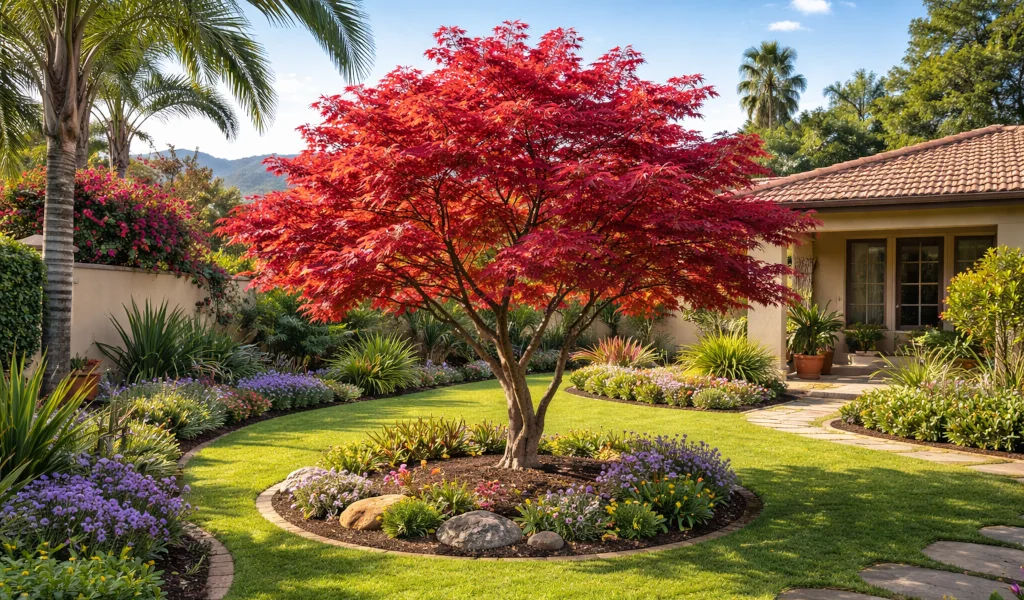
Japanese maples, or Acer palmatum, bring delicate foliage and vibrant colors to any garden, but they demand specific attention in Centurion’s climate. These trees aren’t native to South Africa, so success hinges on mimicking their preferred conditions from cooler, forested origins. In Centurion, where summers hit 26-30°C with heavy rains and winters drop to 16-22°C with occasional frost, you’ll need to protect them from intense heat and dry spells. Start by sourcing grafted varieties from local nurseries like those in Pretoria, as seedlings often struggle in our variable weather. Expect slower growth here compared to milder zones, but with proper siting, they can reach 3-5 meters over a decade. Avoid planting in open lawns; instead, integrate them into shaded borders for natural protection.
Centurion’s subtropical highland climate means hot, wet summers from October to March and dry, mild winters from May to August.
Annual rainfall averages 700mm, mostly in summer thunderstorms, so supplemental watering becomes critical during winter droughts. Japanese maples dislike extreme heat above 30°C, which can scorch leaves, so monitor for stress during January peaks when humidity drops. Frost in June or July rarely kills established trees but can damage new growth, so mulch heavily to insulate roots. Our alkaline municipal water, often pH 8.0, clashes with their acidic needs, so collect rainwater or acidify tap water with vinegar to hit pH 5.5-6.5. Test your soil pH annually; if it’s over 7.0, amend with sulfur to prevent nutrient lockout. In windy areas like open plots near the Hennops River, plant windbreaks to shield fragile branches.
Select varieties bred for heat tolerance to thrive in Centurion.
‘Bloodgood’ holds deep purple leaves through summer without fading, growing to 4-5m with a rounded canopy ideal for small yards. For weeping forms, try Acer palmatum var. dissectum, a dwarf reaching 1.5m, perfect for pots on patios where you can control moisture. ‘Ryusen’ cascades dramatically, suiting hanging positions or rockeries, and handles our humidity better than upright types. Avoid sensitive imports like ‘Mikawa Yatsubusa’ unless you have a microclimate with consistent shade; they burn easily in full sun. ‘Moonrise’ offers variegated leaves that brighten shaded spots, but prune it lightly to maintain shape. Source from specialists like Japanese Maples South Africa for grafted stock that establishes faster in our soils. Plant in autumn, around April-May, when roots settle before winter dry-out. Space multiples 3-4m apart for air circulation, preventing fungal issues in humid summers.
Position your Japanese maple in dappled shade to mimic forest understories.
In Centurion gardens, east-facing spots catch gentle morning sun but avoid harsh afternoon rays from the west, reducing leaf scorch. Plant under taller trees like silver birch or plane trees for filtered light, ensuring at least 2-4 hours of direct sun daily for color development. Near water features, such as small ponds in backyard retreats, humidity stays higher, aiding transpiration in dry winters. For sloped gardens common in Centurion’s hilly terrain, choose elevated positions with good drainage to prevent waterlogging during rains. Avoid south-facing walls that trap heat, opting instead for north or northeast exposures where frost is less severe. In compact urban plots, use containers on shaded verandas, rotating pots to even growth. Protect from prevailing southeast winds by siting behind fences or hedges, as gusts shred delicate leaves. For larger cultivars, flank driveways but ensure 5m clearance from pavement to avoid root damage. In community gardens like those in Irene, group them with azaleas for complementary acidity and shade.
Prepare soil meticulously since Japanese maples root shallowly and hate compaction.
Dig a hole twice the root ball’s width, 30-40cm deep, incorporating 40% pine bark, 30% peat moss, and 30% native sandy loam for drainage. Aim for pH 5.5-6.5; if your Centurion clay is alkaline, add elemental sulfur at 100g per square meter and retest after a month. Mix in composted leaves for organic matter, boosting moisture retention without sogginess. Plant at the same depth as in the nursery pot, spreading roots outward to encourage stability. Mulch with 5-7cm of pine needles around the base, keeping it 10cm from the trunk to deter rot. In pots, use a 50/50 blend of potting soil and perlite, repotting every 2-3 years to refresh nutrients. Water thoroughly after planting to settle soil, then stake loosely if winds are an issue. For raised beds in flood-prone areas, elevate 20cm to ensure excess rain drains away quickly.
Water consistently to keep roots moist but not waterlogged, adjusting for Centurion’s seasonal shifts.
In summer, soak deeply every 3-4 days, delivering 20-30 liters per mature tree to reach 30cm depth. Use drip irrigation to target roots, avoiding leaf wetting that invites fungus in humid weather. During winter dry spells, water every 7-10 days if no rain falls, as dormant trees still lose moisture through evaporation. Check soil by digging 15cm down; if dry, irrigate immediately to prevent tip dieback. Potted maples dry faster, so water daily in heatwaves above 28°C, but reduce in overcast periods. Always water in the morning to allow foliage to dry, minimizing disease risk. Install rain gauges to track natural input, supplementing only when under 20mm weekly. For young trees, use soaker hoses for even distribution, transitioning to basin watering as they mature. Acidify water if needed, adding 1ml vinegar per liter to match preferences.
Fertilize sparingly to avoid lush growth prone to pests in our warm climate.
Apply a slow-release, low-nitrogen formula like 4-8-5 in early spring, March-April, at half the label rate. Scatter 50g per square meter around the drip line, watering in to activate. Skip for the first year post-planting; let roots establish naturally. Use organic options like Holly-Tone for acidity, applying once annually to prevent burn. Stop by June to harden off before winter; excess nitrogen weakens frost resistance. In pots, dilute liquid feed monthly during growth, halving strength. Monitor for yellowing leaves signaling deficiency; test soil and adjust with micronutrients if needed.
Prune in late winter, July-August, when dormant to minimize sap loss. Remove dead or crossing branches at the collar, using sharp shears for clean cuts. Thin inner canopy for airflow, reducing humidity buildup in summer rains. Limit to 20% removal per session to avoid stress; heavy pruning invites disease. For shaping, cut back to buds facing outward, promoting balanced form. Weeping varieties need minimal intervention; just tidy tips. Sanitize tools with alcohol between cuts to prevent spread.
Watch for aphids clustering on new shoots; hose them off weekly or prune infested tips.
Scale insects appear as bumps; apply neem oil in early stages. Verticillium wilt causes branch dieback; improve drainage and remove affected parts. Root rot from overwatering shows as wilting; repot in fresh soil if potted. Encourage beneficial insects by planting companions like marigolds.
In summer, shade cloth during heatwaves protects leaves. Winter mulching conserves moisture and insulates. Autumn colors peak in May; rake leaves to prevent mold. Spring checks for frost damage guide early care.
With these steps, your Japanese maple will flourish, adding elegance to your Centurion garden for years.